

You have just thrown away a small fortune in Gen 5 server chips. The datasheet promised 32 GT/s. Your promotional staff are already trumpeting about record throughput. But in the rack? The performance is tanking. The work loads in your multitennants are slacking, and your Express Lane is beginning to resemble rush hour at the airport terminal. What is wrong with your high-speed silicon! And it is not a signal integrity problem. It’s a Protocol Logic crisis.
The “Arbitration” Trap
Gen 5 of PCIe provides you with a larger pipe, yet does not identify the user of the pipe. When your controller is trying to fetch benchmark numbers by optimizing enormous Bulk Writes it will probably be starving your high-priority Metadata.
The Reality
In the case of a offending bulk dump consuming the queue, your cloud SLAs are diluted by latency. You are not operating a data centre, you are operating a bottleneck.
Ghost in the Machine – LTSSM Recovery
At 32 GT/s, heat is your enemy. Connections to your server rack warm up, your connection may be imperceptibly degenerating into an LTSSM (Link Training and Status State Machine) state of Recovery.
Credit starvation (The Silent Killers of performance)
When your receiver is unable to clear its buffer at a pace faster than the Flow Control Credit is being issued, it will cease to issue the Flow Control Credits.
The Problem
Instead of crashing, the system is slowed down to restart training sequences. To the architect, it’s a “ghost.” To the user, it’s a laggy server. An oscilloscope can never do this.
The Result
The transmitter just. stops. When your 32GT/s connection is being used, it is actually reduced to Gen 3 speeds since the protocol is waiting the clear to send signal which is not received.
The Bottom Line
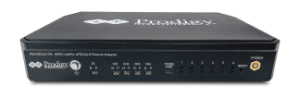
Stop selling your data center as a black box. When you only certify the physical pipe, you are half the truth. We help you find the why at Prodigy Technovations. Our PGY-PCIe Gen3/4/5 Protocol Analyzer provides deep NVMe 2.0 decoding, detailed LTSSM state machine transitions for both upstream and downstream links, and comprehensive sideband signal decoding. This enables you to clearly demonstrate that your silicon is performing all the functions promised in the datasheet. Stop chasing benchmarks. Start validating intent.